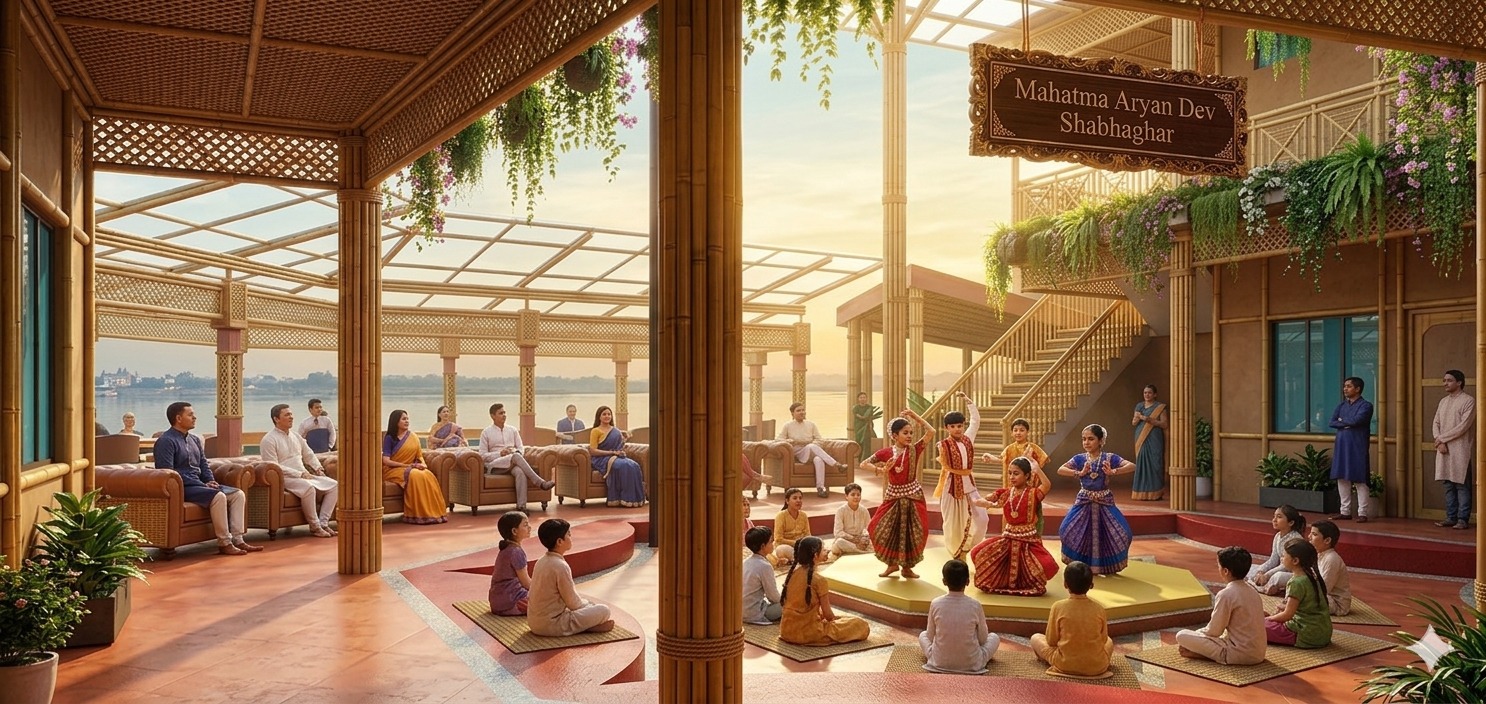
The Community
Who lives here. How they join. What binds them together.
Who lives here. How they join. What binds them together.
The People
Four groups come together on this campus — each with a distinct role, each essential to the ecosystem.
Young learners enrolled in the KarmYog GunaKul, ages 6 to 16. They live on campus in residential dormitories — immersed in a daily rhythm of discipline, creativity, reflection, and community life.
Separate Gunagrahi Awaas for boys and girls ensure dignity and safety. Each Awaas houses 12 learners.
12 beds per Awaas · 36 per ashram · 144 across campus
Elder residents, age 50 and above. These are not passive residents — they mentor, share stories, offer wisdom, and participate actively in the life of the campus. Swajan means "our own people."
Each Swajan lives in a dignified community home with lifetime residence — a place of belonging, not just shelter.
7 Swajan Grihas per ashram · 28 across campus
Scholars, Gurus, and institutional visitors who stay in Atithi Kutirs — guest accommodations designed for reflection and exchange. Their presence enriches the campus with fresh knowledge and perspective.
Values alignment is required. Not every guest is admitted — the institution ensures compatibility with the community's ethos.
Contributors who fund the construction and sustenance of the campus. Sponsors receive naming rights and nomination rights — the ability to nominate a participant for the community.
A sponsor may or may not be a participant themselves. The roles are distinct by design.

Admissions
GunaKul Admissions: Selection is based on curiosity, aptitude, discipline, attitude, family alignment, and institutional fit — not academic marks alone. The GunaKul seeks learners who will thrive in an immersive community, not just perform in exams.
Swajan Admissions: Willingness to participate in community life, compatibility with other residents, dignity, and health suitability are the criteria. This is a community of active elders, not a care facility.
Institutional Discretion: The institution reserves the right to decline admission without public explanation — this is a safeguard for community protection, exercised in good faith.
Sponsor Nominations: Sponsors can nominate themselves, their children, their parents, or anyone they choose — subject to the admissions criteria above.
Economic Inclusion
This is not charity. It is the ethical design of the institution — a deliberate structure that ensures no deserving participant is excluded.
40%
Self-Paying Participants
Pay regular monthly charges for food, maintenance, and utilities
30%
Contributing Participants
Contribute what they can and support others in the community
30%
Sponsored / Scholarship
Fully supported by the sponsorship ecosystem — zero financial barrier
Monthly charges for food, maintenance, and utilities are separate from the one-time sponsorship of spaces. Sponsorship builds the campus. Monthly charges sustain community life.
Rights & Responsibilities
A critical distinction: Sponsor is not the same as Participant. A sponsor funds a space. A participant lives in or uses that space. These roles may overlap, but they are designed to be separate.
| Sponsor Type | Nomination Right |
|---|---|
| Swajan Griha Sponsor | Can nominate an elder (50+) for lifetime residence — including themselves |
| Gunagrahi Awaas Sponsor | First right of refusal on beds — can nominate their children (ages 6-16) or any learner |
| Self-Nomination | Sponsors aged 50+ can nominate themselves as Swajan residents |
| On Exit / Demise | Up to 50% refund of sponsorship, subject to replacement onboarding by the institution |
All nominations are subject to the institution's admissions criteria. Sponsorship guarantees a right to nominate, not automatic admission.
Living Together
Life on the campus follows a rhythm — not rigid, but intentional. Reflection, participation, care for shared spaces, and the discipline of community living form the foundation of each day.
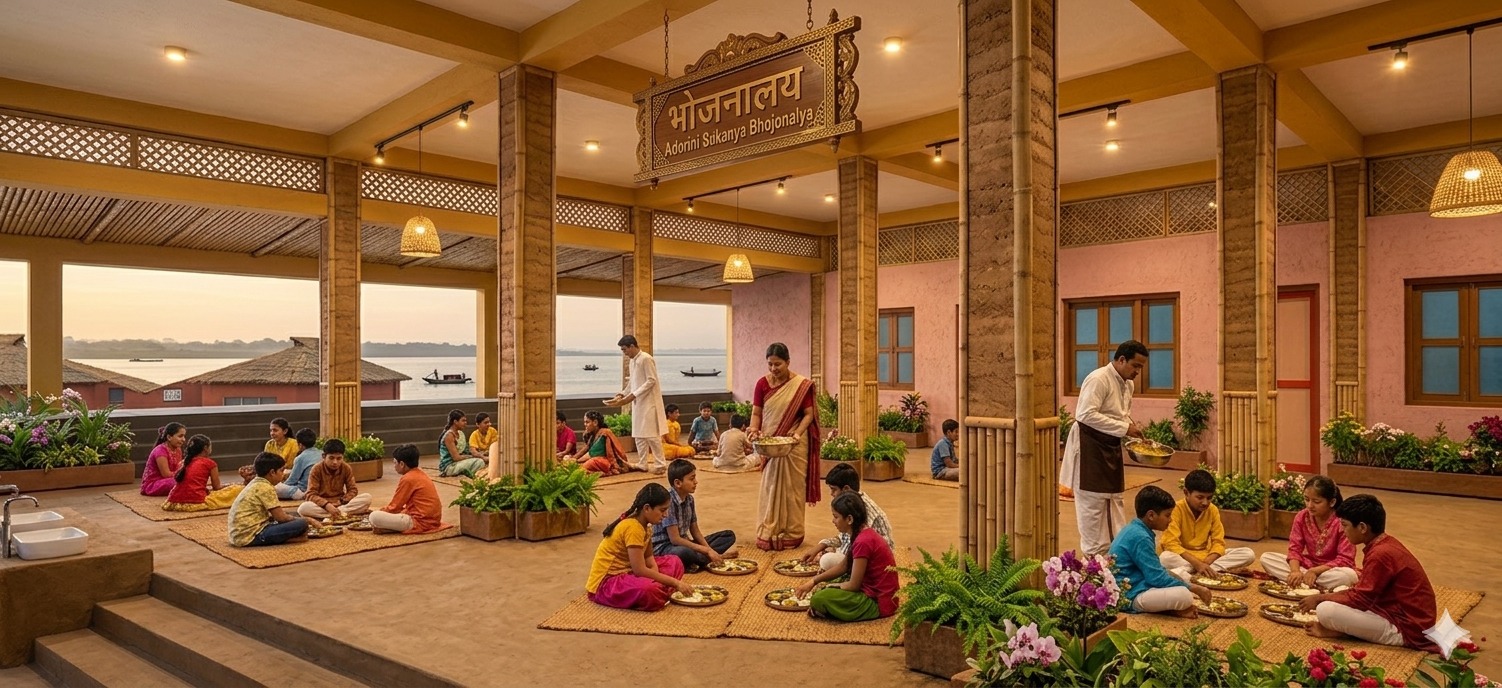
Community meals in the Bhojanalaya are central to campus life — rooted in health, simplicity, and the practice of shared living. Everyone eats together.
Everyone contributes. The elders offer wisdom, stories, and mentorship. The learners bring energy, curiosity, and digital fluency. Staff, visitors, and volunteers bring care and discipline. No one is merely a consumer of this community.
The campus operates under the tutelage of MahAcharyaJi and GunaMata — the institutional guardians who set the tone, resolve conflicts, and hold the community to its charter.
Protection
A community with children and elders demands the highest standards of protection. These are non-negotiable.
The institution maintains the right to enforce these standards without compromise. Community safety is not subject to negotiation.
Governance
The Riverside Vatika Community Charter is the working constitution for residents, learners, sponsors, staff, visitors, and institutional participants. It covers admissions, daily conduct, rights and responsibilities, safeguarding, grievance redressal, and the principles that hold this community together.
"The Community Charter is a living document. It may be amended by the Institution in good faith, as the community grows and learns from its own experience. It is not a contract — it is a covenant."
The full charter is available on request. It is shared with every sponsor and participant before they join the community, in English, Hindi and Bengali.

Sponsor a space, nominate a participant, or simply learn more about how this living ecosystem works.